Art museum highlights architectural details
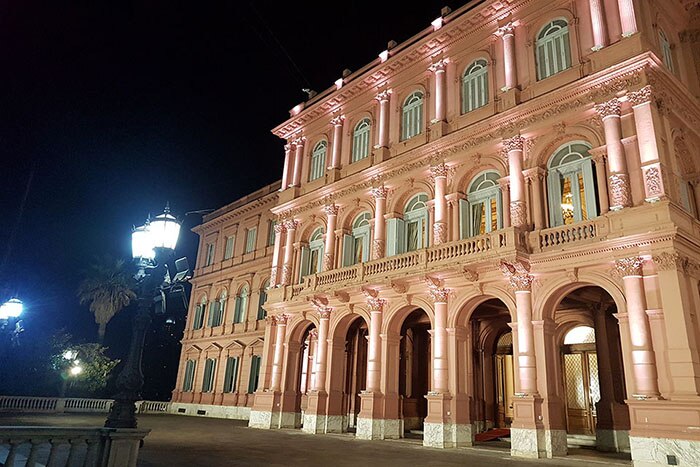
Designed by world renowned American architect Philip Johnson, the Sheldon Museum of Art is a classic structure with sculptural pillars topped by 30 flattened arches. At night this structure turns into a gleaming showpiece for the University of Nebraska Lincoln employees, students and visitors.
The university wanted to re-light the museum’s façade, while maintaining the integrity of the storied architect’s original design and eliminating the heat damage and maintenance issues caused by the former incandescent lighting system. In addition, they primarily wanted to use white light but have the ability to project colored light on occasion.
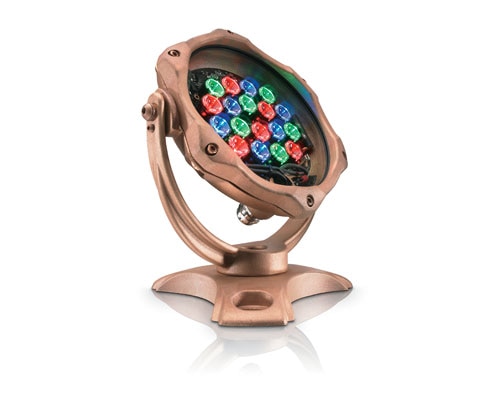
A luminiare incorporating red, green, and blue LEDs was chosen for the ability to project both white light and color-changing effects without the use of gels or filters. In addition, the lack of radiated heat from the LED sources eliminated further damage to the white travertine stone, whereas the original incandescent sources had created a freeze-thaw cycle that caused the stones to crack and move.
The façade measures 155 (length) x 104 (width) x 38 (height) feet and is illuminated by 60 C-Splash 2 luminaires. C-Splash 2 is a rugged and durable luminaire that is suitable for wet locations and can be submersed if required. A total of 30 columns, spaced 13 feet apart, line the museum’s façade. The C-Splash 2 luminiares were installed at the base of each side of every column, spaced 3 3/4 ft feet apart and project light up the façade.
The previous incandescent fixtures were replaced one-for-one by the C-Splash 2 luminaires. Each C-Splash 2 unit was placed within the existing recessed base and mounted 1/2 inch below the existing clear glass lens.
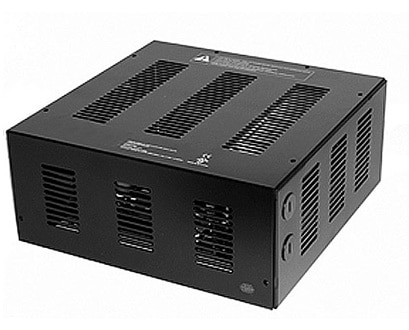
Six C-Splash 2 luminaires connect to one PDS-150e power/data supply, which are stored in the building’s interior in various locations. The entire installation is controlled by iPlayer® 3, leveraging ColorPlay® 3 authoring software to create eight customized light shows. The university can instantly trigger the eight preset light shows via a Controller Keypad, a wall-mounted interface. The staff at the Sheldon Museum of Art intends to utilize the light shows for various special events during the year.
The university can now benefit from the many inherent advantages of LED luminaires, including a longer lifetime (now 80,000 hours vs. the previous sources' 1,000 hours) and cutting down in energy consumption (now 18 watts per luminaire vs. the 300 watt incandescent bulbs); saving the university time and money. In addition, the LED sources are protecting the stone by eliminating the damage that freeze-thaw cycle that the previous sources created, allowing the façade to remain intact for years to come.